introduction

Author
James Smith is a writer and editor for Work in Progress and host of the Dropbox podcast Working Smarter.
similar blogs
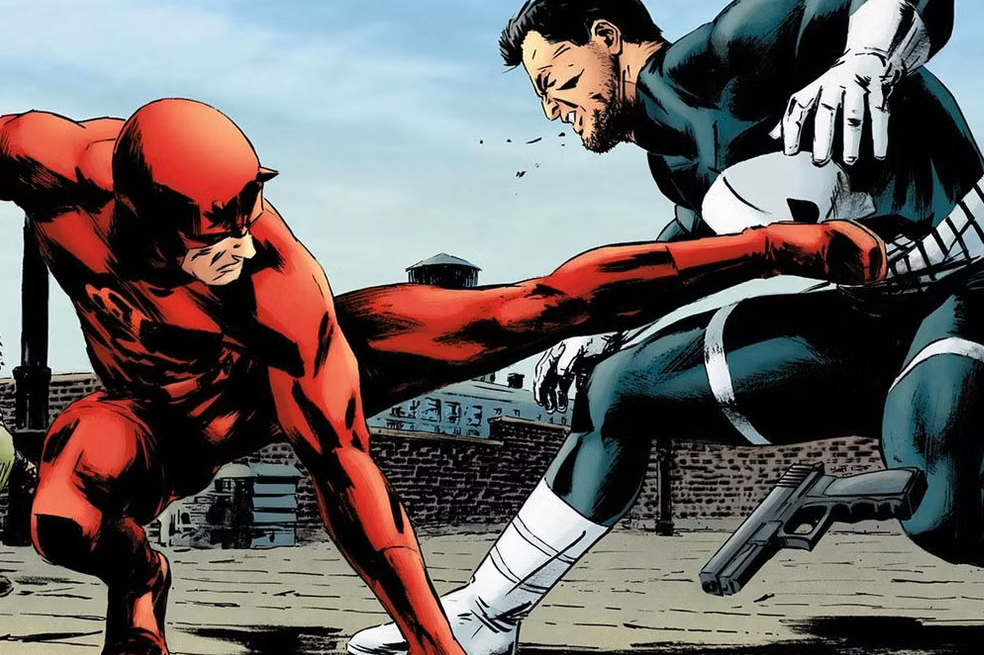
Punisher vs. Daredevil Is Marvel’s Best Argument With Itself
Russia Superhero Comics Said No to Vigilantes and Yes to Government Paperwork

Best Cable Reading Order for People Who Want to Understand This Time Traveling Disaster
Civil War Comic Retrospective After 20 Years of Superheroes Acting Like Reddit Mods
Marvel has a storage closet somewhere filled with unresolved post credit scenes, half-finished character arcs, and one deeply confused Harry Styles wig. The MCU loves introducing huge characters like they just walked into the room carrying the keys to the future of the franchise. Then three years pass. Five years pass. Kang gets rewritten in real time. Suddenly everybody is acting like nobody ever heard of Clea, Scorpion, or the giant Hulk son who appeared for thirty seconds and looked like he lost a fight with unfinished Play-Doh rendering software. That is the weird magic of mcu abandoned characters. They are not always bad characters. Sometimes they are important Marvel figures with decades of comic history behind them. Sometimes they are attached to giant teases that felt universe changing at the time. Then Marvel gets distracted by multiverse spaghetti and everybody moves on until a random fan account tweets “remember this guy?” at 2 AM. The funny part is that some of these characters still matter a lot. A few are probably being saved for future movies like Avengers: Secret Wars or Spider-Man: Brand New Day. Others feel like Marvel accidentally left the stove on and quietly walked out of the house. Side note: We absolutely need to talk about Clea because Marvel dropped a mystical reality tearing sorceress into the MCU and then vanished into another dimension before answering a single question.
For readers who just want the essentials:
| Read | Why It Matters |
| New Mutants #87-100 | First major Cable appearances |
| X-Force (1991) #1-15 | Establishes Cable as a major character |
| The Adventures of Cyclops and Phoenix | Explains Cable’s origin |
| Cable (1993) #1-20 | Defines who Cable is |
| Cable and Deadpool | Peak character work |
| Messiah Complex | Huge turning point |
| Cable (2008) | Cable’s greatest modern run |
| Second Coming | Essential payoff |
| Cable (2020) | Young Cable era |
If you’re willing to go deeper, keep reading.
This is where Cable really arrives.
The New Mutants had already been around for years. Then Cable showed up and immediately transformed the book’s entire personality.
Suddenly everything became sharper. More aggressive. More militarized. More pouches per square inch. Cable takes over mentoring the team and begins shaping them into what eventually becomes X-Force.
What makes these issues important isn’t just his debut. You get a look at the mysterious version of Cable that readers originally encountered.
Nobody knew who he was. Nobody knew his connection to the Summers family. Nobody knew why he acted like he’d seen the end of the world. The mystery was part of the appeal.
Why read it:
You cannot talk about Cable comics without talking about X-Force. This series launched with enough hype to power a small country. The first issue sold millions of copies.
Every character looked ready to arm wrestle a tank. Nobody believed pockets could ever be too numerous. Cable stood at the center of it all.
Modern readers sometimes laugh at early X-Force. Some of that criticism is fair. The book often feels like it was designed by someone who drank six energy drinks and then discovered firearms.
The surprising part is that beneath the excess, there’s a genuinely interesting character. He’s trying to prepare people for a future catastrophe that only he understands. That’s where the character starts becoming more than a walking action figure.
If you’ve ever wondered why Cable’s family tree looks like it was assembled during a medical emergency, this is the story for you.
This miniseries finally reveals the truth behind Nathan Summers’ childhood. Cyclops and Jean Grey are transported into the future and help raise young Nathan. It’s emotional. It’s weird. It’s peak X-Men.
Most importantly, it transforms Cable from a cool mystery into a fully realized person.
Suddenly the scars make sense.
The determination makes sense. The endless war against Apocalypse makes sense. This is arguably the most important Cable origin story Marvel has ever published.
A lot of people skip this run. They shouldn’t. The early issues of Cable’s solo series do more heavy lifting than they get credit for. Writers begin peeling back layers that weren’t visible in X-Force.
You see the strategist. The guy carrying enough responsibility to break most people.
Not every issue is a masterpiece. That’s true for almost every long running comic from the 1990s.
What matters is that this series starts defining who Cable actually is beyond the giant guns. That turns out to be pretty important.
If someone told you the definitive Cable run would involve Deadpool, you would probably assume they were joking.
Marvel wasn’t joking.
The result is one of the best Cable stories ever published. The contrast works perfectly. Cable spends every waking moment trying to save the future. Deadpool spends every waking moment being Deadpool.
Cable wants order. Deadpool creates chaos.
It also gives us one of the most entertaining partnerships in Marvel history. If you’re only reading one Cable run for pure enjoyment, this is a strong contender.
The X-Men line has plenty of crossover events. Most of them matter for a while. Messiah Complex matters forever.
The story revolves around the first mutant birth after M-Day. Every major faction wants the child. Cable becomes one of the central players in protecting her. That child is Hope Summers.
Things get very important very quickly.
This event launches the next phase of Cable’s story and sets up some of his strongest modern material.
If somebody asked me for the single best modern Cable run, this would probably be my answer.
Cable is tasked with protecting Hope Summers. Then he spends years running through time while every possible enemy tries to kill them.
The setup sounds simple. The execution is fantastic. The series transforms Cable into something unexpected.
A father figure.
A protector.
A man trying to build a future worth saving.
Hope and Cable develop one of the strongest relationships in X-Men comics. The emotional core hits surprisingly hard. Meanwhile, the action remains excellent.
This is the point where many readers stop seeing Cable as a cool concept and start seeing him as a great character.
Second Coming serves as the culmination of years of storytelling.
Everything involving Hope. Everything involving Cable. Everything involving mutant survival.
It all crashes together here.
The stakes feel enormous because Marvel actually took the time to build toward them. Cable gets several standout moments. The emotional payoff lands. The action delivers.
Most importantly, the story rewards readers who followed the previous chapters.
Because this is comics, things eventually get weird again.
A younger version of Cable arrives. The older version is removed from the equation. Fans immediately began arguing. As is tradition.
Young Cable brings a different energy to the role. Less grizzled veteran. More dangerously confident teenager with access to time travel.
The series is fun, fast paced, and surprisingly accessible for newer readers.
You don’t necessarily need it for the full Cable experience, but it’s worth checking out if you enjoy the character.
If you’re prioritizing quality over chronology:
This ranking will absolutely start arguments.
That’s part of the fun.
Cable is one of the most fascinating characters in the Marvel Universe, but he also carries one of the most notoriously complex backstories in comic book history.
Don’t. Cable has decades of appearances across multiple books, alternate timelines, crossovers, and events.
A focused reading list will teach you more than a completionist marathon.
Cable’s modern material is excellent.
The character becomes far richer once you understand his connection to Cyclops, Jean Grey, Apocalypse, and the future timeline that shaped him.
Many readers arrive expecting military science fiction. Cable’s best stories often revolve around family. That family just happens to involve clones, psychics, alternate timelines, and mutant messiahs.
If you only have time for one story, start with The Adventures of Cyclops and Phoenix.
If you want the best modern run, read Cable (2008).
If you want maximum entertainment, read Cable and Deadpool.
If you want the complete experience, follow the reading order in this article.
Cable’s history is messy. His timeline is messy. His family tree should probably be classified as a public hazard. The character still works though because Marvel never lost sight of the person underneath all the science fiction chaos.
At his core, Cable is a man fighting for a better future. He just happens to carry enough weapons to invade a small nation while doing it.
Honestly, that’s probably the most normal thing about him.
| Type | What It Means |
| Abandoned | Introduced with clear setup. No follow-up. No confirmed return. Fans left staring into the void. |
| Delayed | Marvel obviously still has plans, but development hell happened. |
| Underused | Character still exists but gets almost nothing meaningful to do. |
| Resolved off-screen | Story technically ended without much fanfare. Not satisfying, but not abandoned. |
| Scorecard | Details |
| First Appearance | Doctor Strange in the Multiverse of Madness |
| Last Seen | Same post credit scene |
| Unresolved Setup | Incursions and multiverse collapse |
| Return Chances | Extremely high |
| Why Fans Care | She is one of Doctor Strange’s biggest comic relationships |
| Scorecard | Details |
| First Appearance | WandaVision |
| Last Seen | Flying into the horizon like a confused philosophical drone |
| Unresolved Setup | Identity, memory restoration, future allegiance |
| Return Chances | Very high |
| Why Fans Care | Vision remains central to Wanda’s story |